D1
Meetings on your calendar
With the business name, its audit score, the channel it came in on, and what was said. No context-free leads.
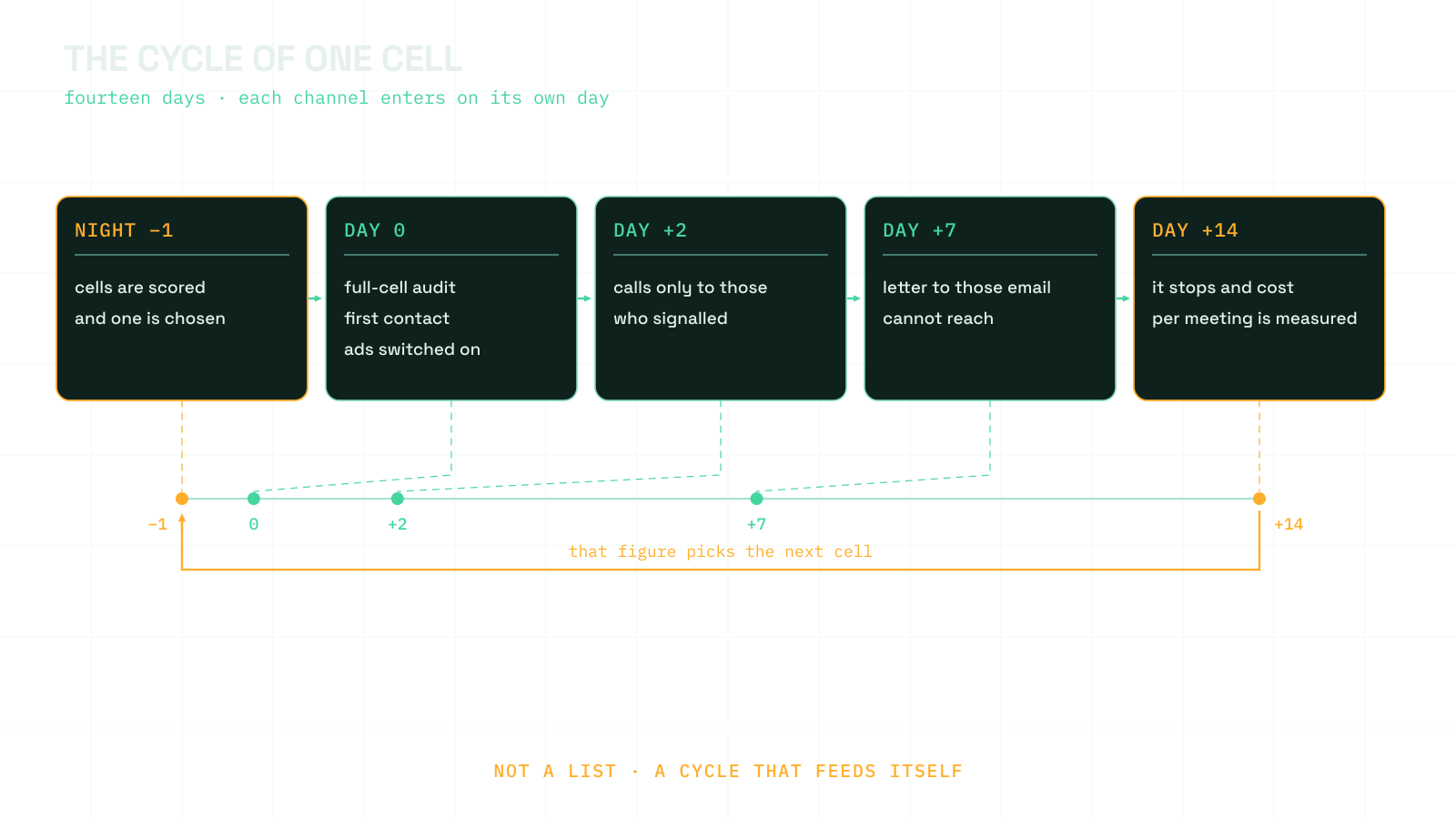
A cell is one trade in one city. It gets picked on data, audited in full, worked on whatever channel each business actually has, and closed with a measured cost per meeting. That number decides which cell opens next.
Before anything opens, every candidate cell in the market is scored and ranked by expected catch. We don't open the biggest cell — we open the one with the best ratio of reachable volume to cost.
Every business in the cell is audited: 0–10 score, mobile load time, listing state, reviews and the three specific failures. With that, the first touch isn't an introduction — it's a diagnosis.
We dial the businesses that opened, clicked, scanned a QR code or visited. The call opens with their audit score, not with a script. Do-not-call registries are checked before any sole proprietor is dialed.
The bulk of the cell — businesses with no website — gets a letter with their own audit printed on it and a unique QR code. 100% deliverability and no competitor in that mailbox.
The cell closes. Cost per meeting and reply rate by channel are calculated, and that result becomes a weight in the next night's scoring: the system learns from the last cell before opening the next.
The channel is not our preference — it is whatever that business actually has. That is the difference between working a cell and burning a list.
| Business situation | Channel | Hook | Reference |
|---|---|---|---|
| No website, working phone | Phone + printed mail | Missing listing details and no site against direct competitors | 30.9% of Spain |
| Website with verified email | Email + follow-up | Audit score and the three specific site failures | 32.7% have email |
| Website, no findable email | Printed mail + ads | Printed audit with a tracking QR code | 2–4.4% reply |
| Chain or franchise | Contact the legal owner | Comparison across their locations inside the cell | 42% identifiable |
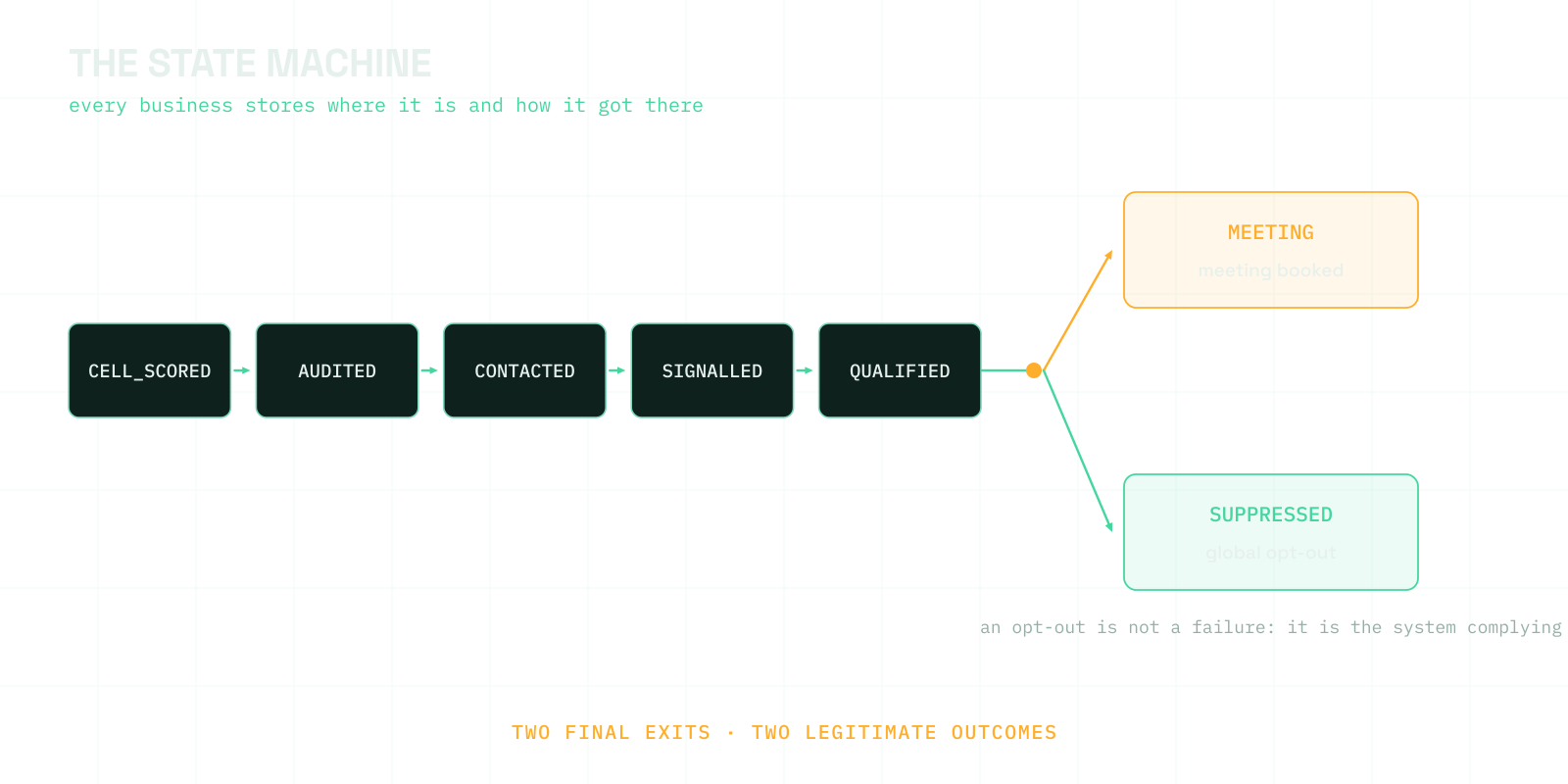
No step depends on a language model remembering where it was. Each business's state lives in a database, every transition is logged, and the system is re-entrant: a crash mid-cell resumes exactly where it stopped. The model writes and classifies inside a state; it never decides the next state.
With the business name, its audit score, the channel it came in on, and what was said. No context-free leads.
How many audited, contacted per channel, how many signals, how many opt-outs. One board, no jargon.
Calculated on the week's real spend, channel by channel. It's the number you use to decide whether to scale or switch trade.
Every send with its legal basis and data origin, plus the suppression list. Exportable if you get audited.
It depends on cell size and trade. In continuous operation the target is 8–12 meetings a month with a new cell opened daily. A small cell of 150 businesses books fewer meetings but usually at a better cost per meeting, because the audit is sharper.
Because past two weeks the marginal return on chasing drops below the return on opening a fresh cell — and because outreach that keeps calling after that stops being prospecting and starts being a nuisance. We shut it down, measure, and move.
Yes, but not within 90 days, and never over businesses that opted out — suppression is global and permanent. On reopening, the audit is rebuilt from scratch, because sites and listings change.
It's recorded as deferred with a date, drops out of the active campaign, and only re-enters if they named a specific time. An explicit no is treated as an opt-out.
We do, up to the booked meeting: audit, first touch, qualifying call, confirmation. You show up to the meeting, which arrives with the business context and its audit score attached.
Tell me the trade and the city and I will send back the real numbers for that cell before you commit to anything.